
写作建议 Writing Advice

周末我重读了乔治 · 奥威尔 (George Orwell) 的一篇文章:Politics and the English Language,政治与英语,写于1946年。
我本希望这篇文章可以包含已出版的最近一百年重要或流行的写作指南,但我没有这个时间奢侈,日常工作已让我焦头烂额。所以,我有请乔治 · 奥威尔的写作原则开启这个建议。
文学家很少给写作提建议,因为文学家们大多有自己高度风格化的语言和直觉型的写作流程,这些能力是他们的秘密武器,不可轻易外传。同时,他们也自认为:写作是自己的天才使然,写作无法传授,语言能力和他们的天赋高度相关。
我部分同意这种观点,但也认为很多文学家们在胡扯。
科学家也很少给写作建议,因为虽然第一流的科学家文理兼修,经典的科学著作甚至会模糊文理的边界,而在这些理性但充满怀疑的科学家意识到之前,他们的写作就已近乎文学,堪称典范,且力大无穷。而第二流的那些科学家,他们根本不在乎写作,这些人认为,数理逻辑大于文学天马行空的思考,正是这个判断暴露了他们作为二流科学家的特质。
历史上,中国人和美国人很相似。不乏有成功的文人或者文学教育者,编写“xx写作指南”,或者喊出“诗必盛唐,文必秦汉”的明代复古派文学主张。
但是编纂“写作指南”的美国人要更多。英美人士非常爱写各种“xx指南”或“xx手册”,作为对一个新手刚进入某个领域的亲身引导或职业标杆 —— 引导迷失方向的新手 ,正是“xx指南手册”的存在价值。
这些指南往往有个需求:idiot-proof,防呆,任何人都能看懂。这是“指南类”(Guide/Manual) 手册的编写原则。
这一切和英美的殖民历史有关。当西方文明在扩张期,它需要大量不同文化、信仰和知识能力的族群,共同建设、促进并维护西方“殖民地”的繁荣和工业发展。在殖民过程中,东方曾被西方强加了大量暴力和不平等。
也正是殖民的暴力历史、试图降低民族冲突的尝试和工业化的需求,催化了一系列手册的诞生。像极了生物演化,任何事物,甚至最令东方人反感的殖民罪行本身,都依然存在可被利用的部分,自然筛选的成果会让善于学习它成果的文明更健壮。
1946年是个“接缝之年”。二战刚在欧洲大陆结束,而另一场"战争"正在开始:核武器引发的原子能时代刚刚降临;同时,对大屠杀的清算正在进行。最关键的一点,这正是政治语言与现实之间的裂缝被撑到最大,也最刺眼的时候。
1945年,奥威尔刚写完《动物庄园》,他1949年的巨著《1984》正在酝酿和创作中,他在 Politics and the English Language(政治与英语)这篇文章里嘲讽的那些委婉语(“绥靖”,“人口转移”,“清除不可靠分子”),在1946年根本不是比喻,是正在发生的新闻。
而奥威尔在这篇关于英文写作的“嘲讽体”文章中到底说了什么?
Enjoy-
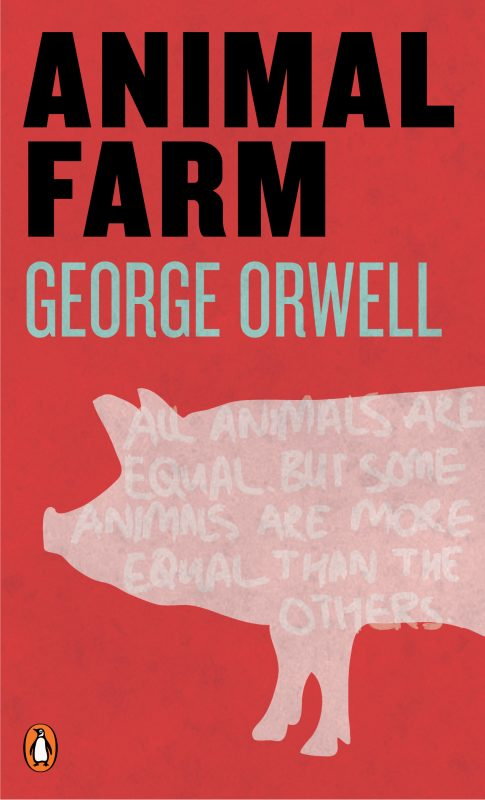
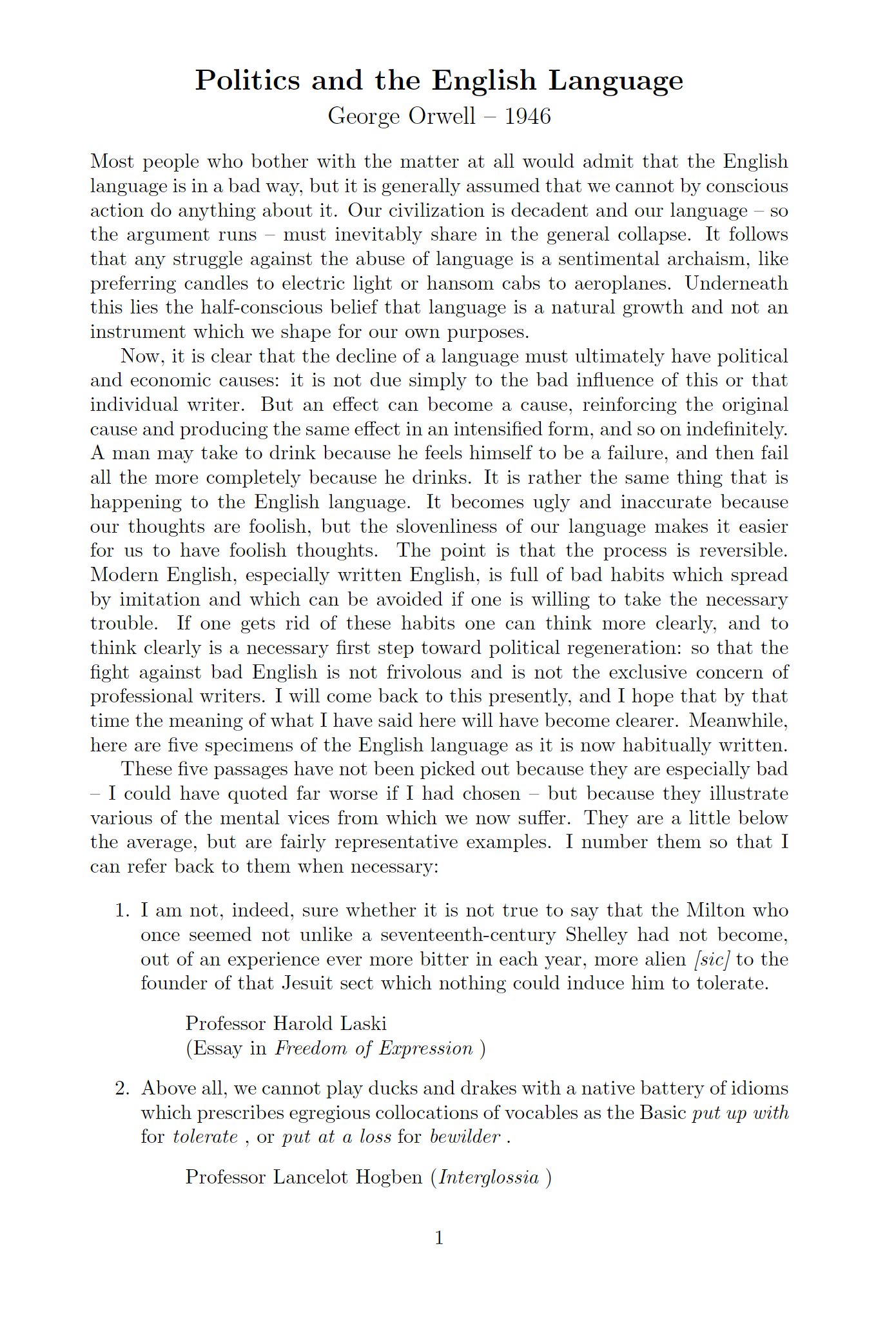
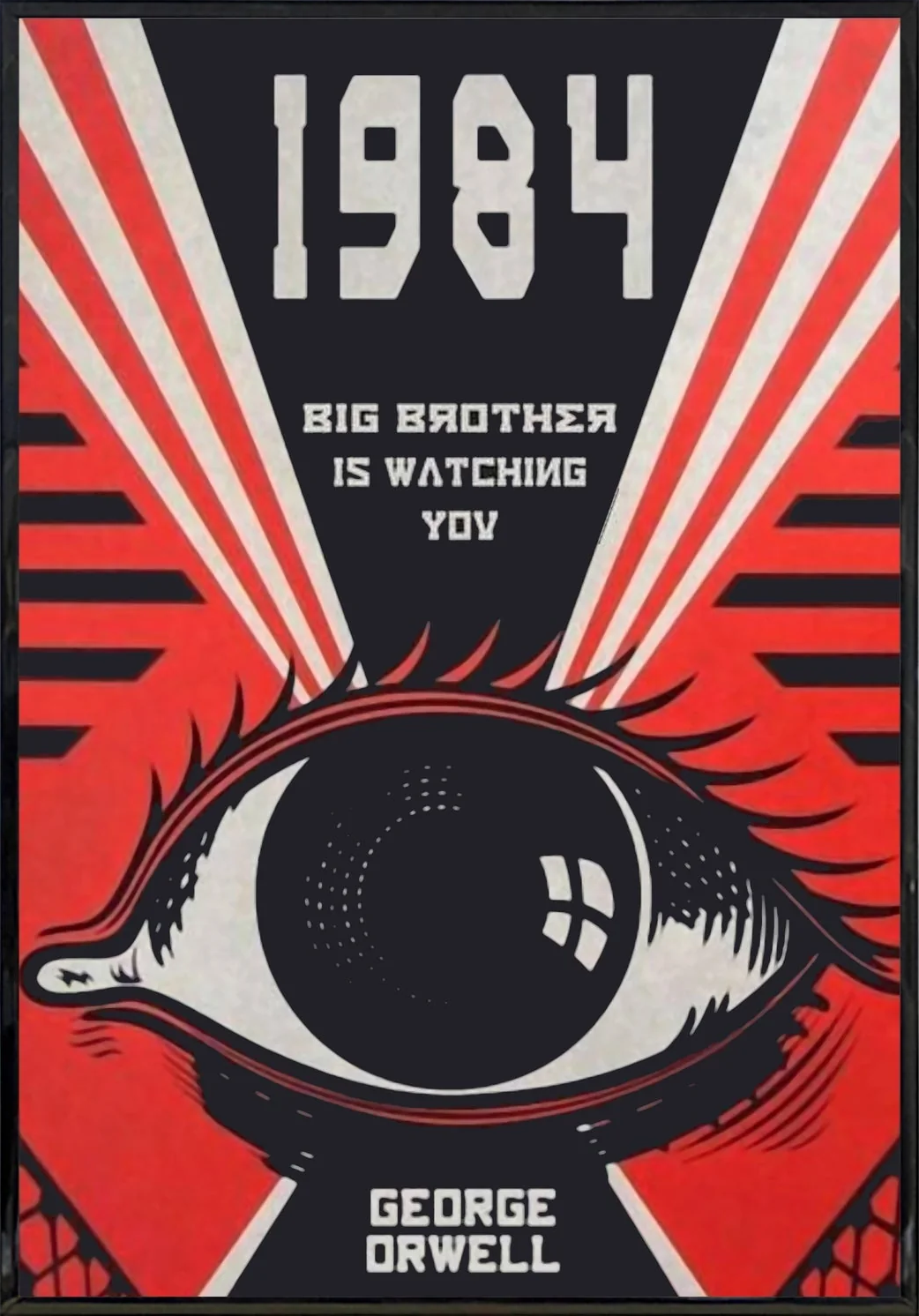
《动物庄园》,1945年;《Politics and the English Language 政治与英语》,1946年;《1984》,1949年。
It becomes ugly and inaccurate because our thoughts are foolish, but the slovenliness of our language makes it easier for us to have foolish thoughts. The point is that the process is reversible.
英语变得丑陋而不准确,是因为我们的思想愚蠢;但我们语言上的邋遢,又使我们更容易产生愚蠢的思想。关键在于,这一过程是可以逆转的。
If one gets rid of these habits one can think more clearly, and to think clearly is a necessary first step toward political regeneration: so that the fight against bad English is not frivolous and is not the exclusive concern of professional writers.
摆脱这些坏习惯,人就能更清楚地思考;而清楚地思考,是政治更新所必需的第一步。因此,反对糟糕英语的斗争并不是轻浮之举,也并非职业作家独有的事情。
-I am not, indeed, sure whether it is not true to say that the Milton who once seemed not unlike a seventeenth-century Shelley had not become, out of an experience ever more bitter in each year, more alien (sic) to the founder of that Jesuit sect which nothing could induce him to tolerate. --Professor Harold Laski (Essay in Freedom of Expression).
-我确实不能确定,是否不能说这样一句话并非不真实:那个曾经看起来颇像十七世纪雪莱的弥尔顿,是否并没有由于一年比一年更加痛苦的经历,而变得更加疏远于[原文如此]那个无论如何都不能诱使他加以容忍的耶稣会派别的创始人。
——哈罗德·拉斯基教授,《论表达自由》
-Above all, we cannot play ducks and drakes with a native battery of idioms which prescribes egregious collocations of vocables as the Basic put up with for tolerate, or put at a loss for bewilder. --Professor Lancelot Hogben (Interglossia).
-最重要的是,我们不能把一整套本土习语当作玩具随意折腾;这套习语规定了某些极其荒谬的词语搭配,例如用 Basic English 中的 put up with 来表示 tolerate,或用 put at a loss 来表示 bewilder。
——兰斯洛特·霍格本教授,《Interglossia》
-On the one side we have the free personality: by definition it is not neurotic, for it has neither conflict nor dream. Its desires, such as they are, are transparent, for they are just what institutional approval keeps in the forefront of consciousness; another institutional pattern would alter their number and intensity; there is little in them that is natural, irreducible, or culturally dangerous. But on the other side, the social bond itself is nothing but the mutual reflection of these self-secure integrities. Recall the definition of love. Is not this the very picture of a small academic? Where is there a place in this hall of mirrors for either personality or fraternity? --Essay on psychology in Politics (New York).
-一方面,我们有自由人格:按定义说,它并非神经症式的,因为它既无冲突,也无梦。它的欲望,若可称为欲望的话,是透明的,因为它们正是制度认可所保持在意识前沿的东西;另一种制度模式会改变这些欲望的数量和强度;其中几乎没有什么是自然的、不可还原的,或在文化上危险的。但另一方面,社会纽带本身不过是这些自我稳固的完整性相互反映而已。回想一下爱的定义。这不正是一个小小学术人的画像吗?在这座镜厅之中,哪里还有人格或博爱的位置?
——纽约某政治心理学论文
-All the ‘best people’ from the gentlemen’s clubs, and all the frantic Fascist captains, united in common hatred of Socialism and bestial horror at the rising tide of the mass revolutionary movement, have turned to acts of provocation, to foul incendiarism, to medieval legends of poisoned wells, to legalize their own destruction of proletarian organizations, and rouse the agitated petty-bourgeoise to chauvinistic fervor on behalf of the fight against the revolutionary way out of the crisis. --Communist pamphlet.
-来自绅士俱乐部的一切“上等人”,以及所有狂热的法西斯军官,由于共同憎恨社会主义,并由于对群众革命运动高涨潮流的兽性恐惧而联合起来,转向挑衅行动,转向卑劣的纵火行为,转向中世纪关于投毒水井的传说,以便使他们自己对无产阶级组织的摧毁合法化,并煽动骚动不安的小资产阶级,使其为了反对摆脱危机的革命出路而陷入沙文主义狂热。
——共产主义宣传册
-If a new spirit is to be infused into this old country, there is one thorny and contentious reform which must be tackled, and that is the humanization and galvanization of the B.B.C. Timidity here will bespeak canker and atrophy of the soul. The heart of Britain may be sound and of strong beat, for instance, but the British lion’s roar at present is like that of Bottom in Shakespeare’s A Midsummer Night’s Dream – as gentle as any sucking dove. A virile new Britain cannot continue indefinitely to be traduced in the eyes or rather ears, of the world by the effete languors of Langham Place, brazenly masquerading as ‘standard English’. When the Voice of Britain is heard at nine o’clock, better far and infinitely less ludicrous to hear aitches honestly dropped than the present priggish, inflated, inhibited, school-ma’amish arch braying of blameless bashful mewing maidens! --Letter in Tribune.
-如果要向这个古老国家注入一种新精神,就必须处理一项棘手而有争议的改革,那就是使英国广播公司人性化并振作起来。在这里胆怯,将显示灵魂的溃烂与萎缩。英国的心脏或许仍然健全而有力地跳动;但是如今英国雄狮的吼声,却像莎士比亚《仲夏夜之梦》里的波顿一样——温柔得像一只吃奶的鸽子。一个阳刚的新英国,不能无限期地继续在全世界的眼中——或者更确切地说,在全世界的耳中——被兰厄姆广场那种衰弱无力、却厚颜无耻地冒充“标准英语”的腔调所诋毁。当九点钟“英国之声”响起时,听见诚实地省掉 h 音的口音,远比听见现在这种自命不凡、浮夸、压抑、女教师式、故作高雅的无辜羞怯少女的喵喵叫,要好得多,也要少荒唐得多!
——《论坛报》读者来信
(在引用了上述一系列糟糕写作的范例后,奥威尔写道:)
Each of these passages has faults of its own, but, quite apart from avoidable ugliness, two qualities are common to all of them. The first is staleness of imagery; the other is lack of precision. The writer either has a meaning and cannot express it, or he inadvertently says something else, or he is almost indifferent as to whether his words mean anything or not. This mixture of vagueness and sheer incompetence is the most marked characteristic of modern English prose...
这些段落各有各的毛病,但撇开可以避免的丑陋不谈,它们共有两个特点。第一是意象陈腐;第二是缺乏精确性。作者要么有某种意思却表达不出来,要么无意中说成了别的东西,要么几乎不在乎自己的话到底有没有意义。这种含混与纯粹无能的混合,是现代英语散文最显著的特征……
As soon as certain topics are raised, the concrete melts into the abstract and no one seems able to think of turns of speech that are not hackneyed: prose consists less and less of words chosen for the sake of their meaning, and more and more of phrases tacked together like the sections of a prefabricated hen-house.
一旦涉及某些话题,具体的东西就融化成抽象的东西,似乎没有人能想到不落俗套的说法;散文越来越少由根据意义挑选出来的词组成,越来越多由一些短语拼接而成,仿佛预制鸡棚的一块块板材。
A newly invented metaphor assists thought by evoking a visual image, while on the other hand a metaphor which is technically ‘dead’ (e. g. iron resolution) has in effect reverted to being an ordinary word and can generally be used without loss of vividness. But in between these two classes there is a huge dump of worn-out metaphors which have lost all evocative power and are merely used because they save people the trouble of inventing phrases for themselves.
一个新创造出的比喻能够唤起视觉形象,从而帮助思考;另一方面,一个在技术上已经“死亡”的隐喻(例如 iron resolution,“钢铁般的决心”)实际上已经退化为普通词语,通常可以使用而不损害生动性。但在这两类之间,有一大堆破旧的隐喻:它们已经失去了一切唤起形象的能力,只是因为能省去人们自己创造短语的麻烦,才被继续使用。
Foreign words and expressions such as cul de sac, ancien régime, deus ex machina, mutatis mutandis, status quo, Gleichschaltung, Weltanschauung, are used to give an air of culture and elegance. Except for the useful abbreviations i.e., e.g., and etc., there is no real need for any of the hundreds of foreign phrases now current in English. Bad writers, and especially scientific, political and sociological writers, are nearly always haunted by the notion that Latin or Greek words are grander than Saxon ones, and unnecessary words like expedite, ameliorate, predict, extraneous, deracinated, clandestine, sub-aqueous and hundreds of others constantly gain ground from their Anglo-Saxon opposite numbers.
外来词和表达,如 cul de sac、ancien régime、deus ex machina、mutatis mutandis、status quo、Gleichschaltung、Weltanschauung,被用来制造有文化、有风度的气息。除了有用的缩写 i.e.、e.g. 和 etc. 之外,英语中如今流行的数百个外来短语并没有真正必要。糟糕的作家,尤其是科学、政治和社会学写作者,几乎总被这样一种观念纠缠:拉丁或希腊词比撒克逊词更高贵。因此,像 expedite(加速)、ameliorate(改善)、predict(预测)、extraneous(外来的)、deracinated(失根的)、clandestine(秘密的)、subaqueous(水下的)以及数百个类似的不必要词语,不断从其盎格鲁—撒克逊同类那里夺取地盘。
K注:感谢乔治 · 奥威尔,告诉我们作为撒克逊的英文单词不如拉丁文和希腊文那么“高贵”。80年后的今天,中文也正在经历,不夹杂一些英文就“不够高档”、“缺乏高贵气息”、“不够装模作样”的问题。崇尚中华文学的人也深受其害。感谢奥威尔,告诉大家英文也同样充满了自卑,it sure was and it still is.
A scrupulous writer, in every sentence that he writes, will ask himself at least four questions, thus:
1. What am I trying to say?
2. What words will express it?
3. What image or idiom will make it clearer?
4. Is this image fresh enough to have an effect?
And he will probably ask himself two more:
1. Could I put it more shortly?
2. Have I said anything that is avoidably ugly?
一个严谨的作者,在写下每一个句子时,至少会问自己四个问题:
1. 我究竟想说什么?
2. 哪些词能表达它?
3. 哪个形象或习语能使它更清楚?
4. 这个形象是否足够新鲜,能够产生效果?
他也很可能再问自己两个问题:
1. 我能不能说得更短些?
2. 我有没有说出任何本可以避免的丑话?
You can shirk it by simply throwing your mind open and letting the ready-made phrases come crowding in. They will construct your sentences for you – even think your thoughts for you, to a certain extent – and at need they will perform the important service of partially concealing your meaning even from yourself.
你可以逃避(下功夫),只要敞开头脑,让现成的短语蜂拥而入即可。它们会替你造句——甚至在某种程度上替你思考——而在需要的时候,它们还会发挥一项重要作用:把你的意思部分地掩盖起来,甚至连你自己也看不清。
The great enemy of clear language is insincerity. When there is a gap between one’s real and one’s declared aims, one turns as it were instinctively to long words and exhausted idioms, like a cuttlefish spurting out ink.
清晰语言的最大敌人是不真诚。当一个人的真实目标与他宣称目标之间存在裂缝时,他就会仿佛本能地转向长词和耗尽生命的习语,如同乌贼喷出墨汁。
What is above all needed is to let the meaning choose the word, and not the other way around. In prose, the worst thing one can do with words is surrender to them.
最重要的是,让意义选择词语,而不是让词语选择意义。在散文中,对词语所能做的最坏的事,就是向它们投降。
When you think of something abstract you are more inclined to use words from the start, and unless you make a conscious effort to prevent it, the existing dialect will come rushing in and do the job for you, at the expense of blurring or even changing your meaning.
当你想到抽象事物时,你更容易一开始就使用(现成)词语;如果不作有意识的努力加以阻止,现成的短语就会涌入,替你完成工作,这么做的代价是模糊甚至改变你想表达的意思。
This last effort of the mind cuts out all stale or mixed images, all prefabricated phrases, needless repetitions, and humbug and vagueness generally.
But one can often be in doubt about the effect of a word or a phrase, and one needs rules that one can rely on when instinct fails. I think the following rules will cover most cases:
1. Never use a metaphor, simile, or other figure of speech which you are used to seeing in print.
2. Never use a long word where a short one will do.
3. If it is possible to cut a word out, always cut it out.
4. Never use the passive where you can use the active.
5. Never use a foreign phrase, a scientific word, or a jargon word if you can think of an everyday English equivalent.
6. Break any of these rules sooner than say anything outright barbarous.
最后这一番心智努力,能排除一切陈旧或混杂的形象、一切预制短语、不必要的重复,以及总体上的欺瞒和含混。
但一个人常常会怀疑某个词或短语的效果;当直觉失灵时,就需要可以依靠的规则。我认为下面几条规则足以覆盖大多数情况:
1. 凡是你习惯于在印刷品上见到的隐喻、明喻或其他修辞,都不要使用。
2. 能用短词时,绝不用长词。
3. 如果一个词可以删掉,就一定删掉。
4. 能用主动语态时,绝不用被动语态。
5. 如果能想到日常英语中的对应说法,就绝不用外来短语、科学词或专业行话。
6. 宁可打破上述任何规则,也不要说出明显是粗野滥造的话。
乔治 · 奥威尔的这篇文章,跨越了半个多世纪,依然作为一个强大的幽灵,活跃在今天英文写作的方法论中。
比如,最具影响力的英文财经杂志之一《经济学人》(The Econimist) ,就把乔治 · 奥威尔结尾的“写作戒律”放在经济学人 Style Guide(风格指南)的开头。这让《经济学人》的文风,依旧很大程度上沿袭1946年乔治 · 奥威尔的原则。
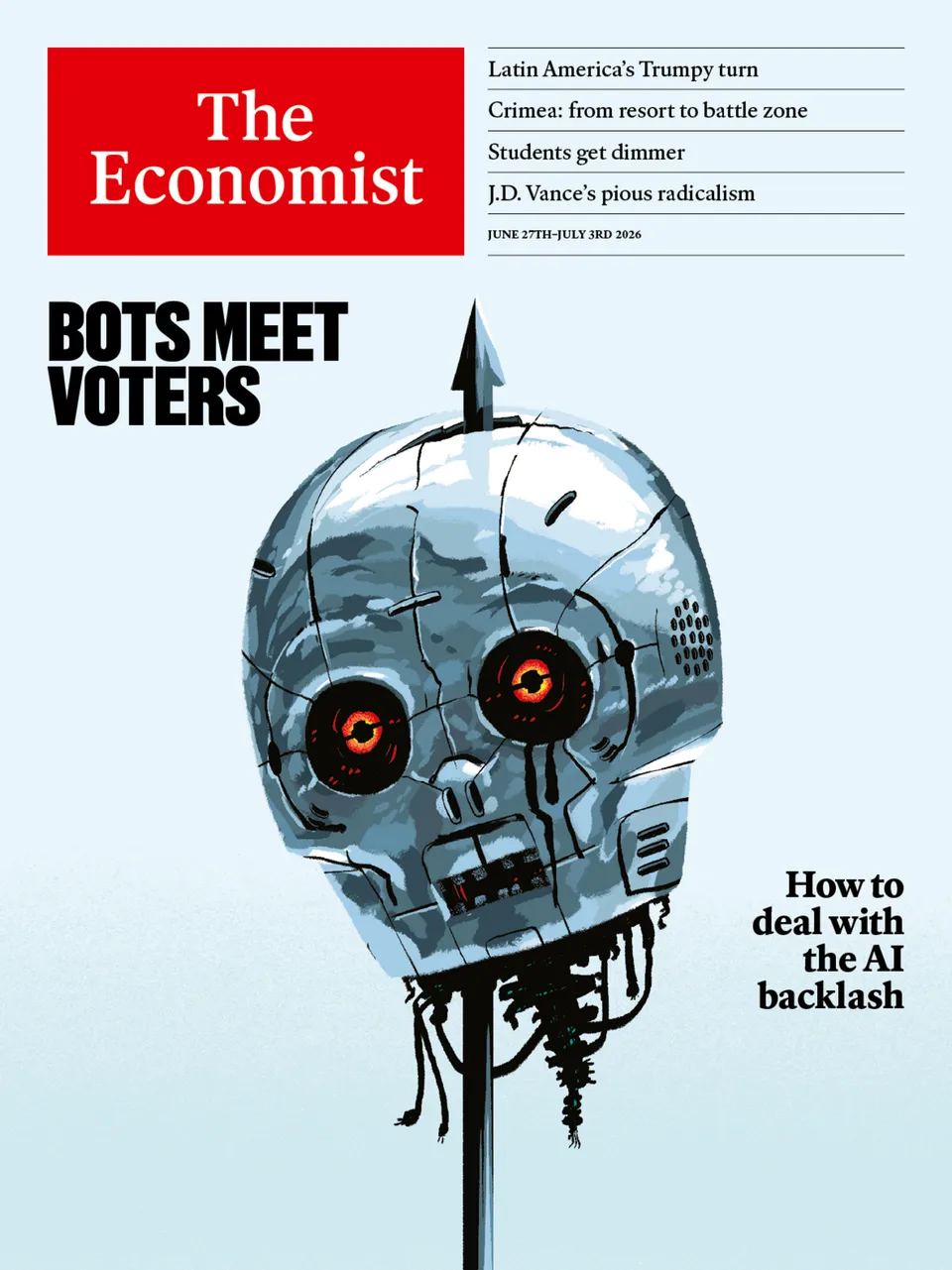
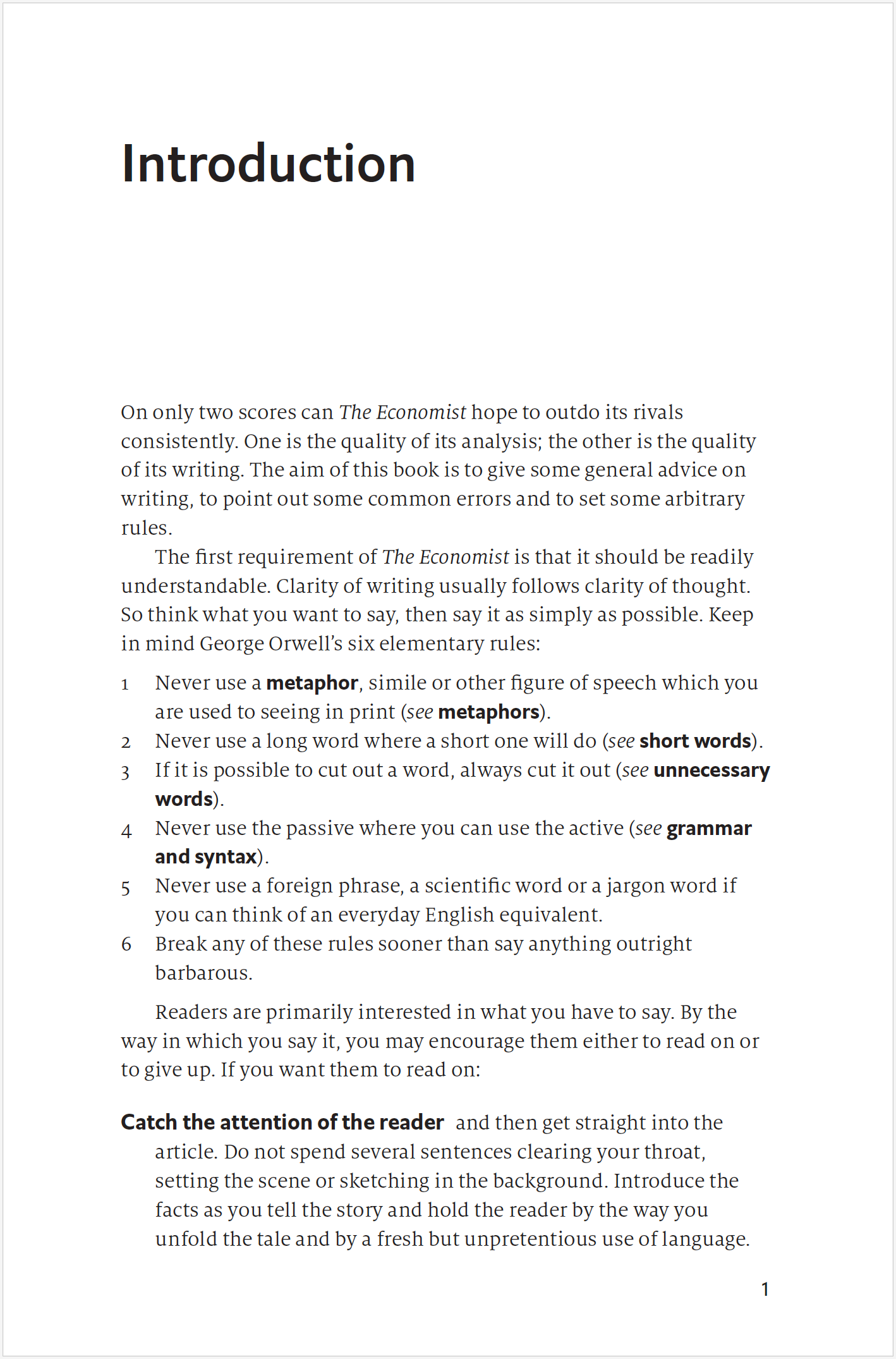
左一:最近一期《经济学人》;右二:经济学人的写作指南
这篇内容会继续更新。我还没有资格给别人写作建议,写作是一所社会大学,而我永远不会毕业。

Member discussion